Five Reasons Your Prescription Can't Just Show Up at Your Door — And What to Do About It
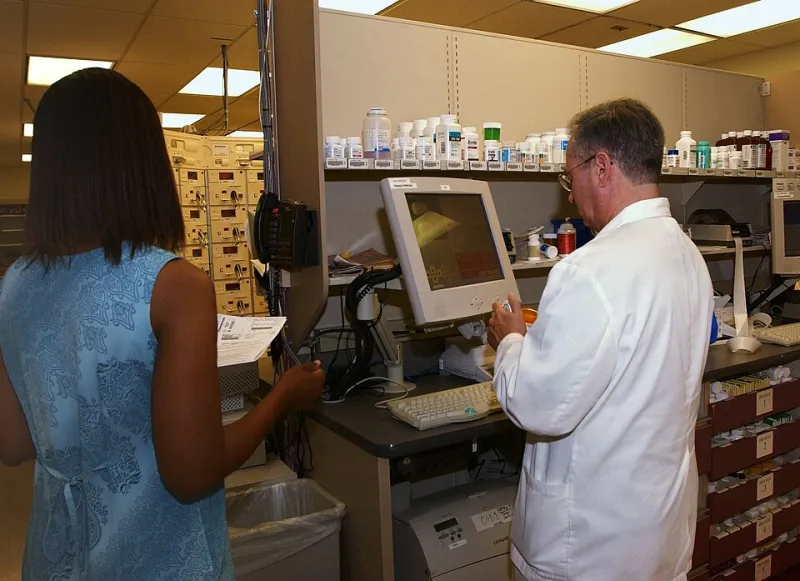
Photo: U.S. Navy photo by Chief Warrant Officer 4 Seth Rossman., Public domain, via Wikimedia Commons
For many patients, home delivery of medications has become as routine as a grocery order. Then comes the surprise: the sleep aid or the ADHD medication that always arrives on time at the pharmacy suddenly cannot be shipped at all. The explanation lies in a web of federal and state rules designed for an era before doorstep delivery — rules that still govern which prescriptions can travel to your door.
1. Federal Schedules Create Hard Limits
The Controlled Substances Act sorts medications into schedules based on their potential for abuse and dependence. Schedule II drugs — which include opioid painkillers and stimulants such as those used for ADHD — face the tightest restrictions, including limits on how prescriptions may be transmitted and refilled. Lower schedules, including many sleep aids and anti-anxiety medications, carry restrictions of their own. The higher the schedule, the fewer the channels through which a prescription can legally reach you.
2. The DEA Requires Special Registration to Mail Controlled Substances
A pharmacy cannot simply drop a controlled substance in the mail. Dispensing and distributing scheduled medications online or by mail requires registration with the Drug Enforcement Administration, along with strict identity verification, secure packaging, and recordkeeping requirements. Many legitimate pharmacies have simply chosen not to take on that compliance burden, which is why the medication is legal — but the delivery service does not offer it.
3. States Layer Their Own Rules on Top
Federal law sets a floor, not a ceiling. Individual states impose additional requirements: some restrict out-of-state pharmacies from shipping controlled substances to in-state patients; some require in-person identity checks before dispensing; some limit the quantity that can be supplied at once. A prescription that can be delivered legally in one state may be prohibited just across the border — a genuine problem for the growing number of patients who use national mail-order services.
4. Identity Verification Is Deliberately Inconvenient
The rules require pharmacies to verify that the person receiving a controlled substance is the person named on the prescription. That may mean photo identification, identity-proofing through credential checks, or — in some cases — in-person pickup by design. This friction is not a bug. Regulators built it in specifically to prevent diversion, the channeling of medications into unauthorized hands.
5. Telehealth Prescribing Rules Add a Final Hurdle
Even obtaining the prescription remotely has been complicated. Prescribing controlled substances via telemedicine has been governed by evolving federal flexibilities and restrictions in recent years, meaning a patient may be able to consult a doctor by video but still be required to satisfy in-person or identity requirements before the prescription can be filled — let alone delivered.
Practical Workarounds for Patients
If your medication falls into a restricted category, several legitimate options remain:
- Ask your pharmacy about in-store pickup with automated refills, which preserves convenience while satisfying identity requirements.
- Use a local pharmacy with its own delivery service, where the driver is a pharmacy employee authorized to verify identity at the door.
- Confirm your state's rules through your state board of pharmacy before assuming a national service can ship to you.
- Discuss alternatives with your prescriber. For some conditions, non-scheduled medications exist that carry no delivery restrictions.
- Never use an unverified online seller. Websites offering to ship controlled substances without a prescription are illegal and frequently dangerous.
The restrictions can feel arbitrary from a patient's perspective. But they exist because these medications carry real risks of misuse — and until regulators build a framework that balances access with control, some prescriptions will simply require a trip to the counter.