Wings Over the Wheat Fields: Why Rural America Will Get Its Medications by Air Before City Dwellers Do
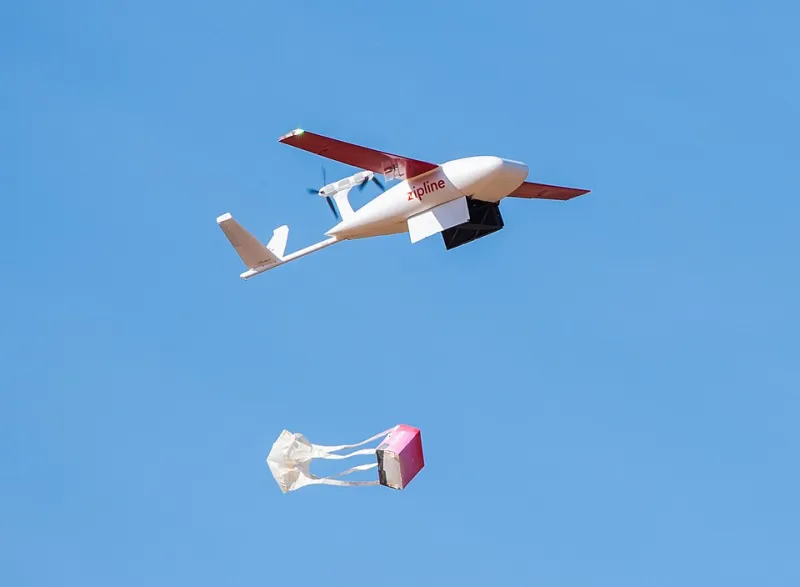
Photo: Roksenhorn, CC BY-SA 4.0, via Wikimedia Commons
The conventional assumption about drone delivery is that it will debut in dense, wealthy urban neighborhoods — the places where tech companies pilot their flashiest projects. Medication delivery is upending that assumption. The communities most likely to see a pharmacy drone humming overhead in the next few years are not in Manhattan or San Francisco. They are in Kansas, North Carolina, and the hills of Appalachia.
The Economics of the Last Twenty Miles
For a traditional pharmacy, serving a patient forty minutes from the nearest town is expensive: a delivery driver, a vehicle, fuel, and an hour of labor for a single bag of pills. For a drone, distance over unobstructed terrain is nearly free. Rural routes lack the congested airspace, towering obstacles, and dense populations that complicate low-altitude flight in cities. Open farmland is, from a regulator's perspective, the easiest place in America to fly.
That is why early pharmacy drone programs have clustered in less densely populated regions. Retail giants and pharmacy chains have run trials in Texas, North Carolina, Virginia, and Arkansas, delivering everything from over-the-counter allergy medicine to prescription maintenance drugs. The results have been consistent: flight times measured in minutes, delivery windows measured in hours rather than days, and patient satisfaction scores that would make any pharmacy manager envious.
The Regulatory Runway
The Federal Aviation Administration, not the pharmacy, is the true gatekeeper here. Under current rules, most commercial drones must operate within the operator's line of sight, fly below 400 feet, and avoid flight over people. Each of these constraints shapes what medication delivery can look like today.
The FAA has, however, granted waivers to several operators allowing beyond-visual-line-of-sight flights, and the agency's rulemaking agenda includes provisions that would formalize routine long-range drone operations. Autonomous ground vehicles face a parallel, state-by-state patchwork: some states have embraced driverless delivery pods on public roads, while others have yet to write the rules at all.
For patients, the practical meaning is this: the technology works, but the legal framework is still being assembled, state by state and waiver by waiver.
Who Benefits First
Three groups stand to gain the most in the near term:
- Chronic-care patients in remote areas who currently drive long distances for routine refills of maintenance medications.
- Homebound and mobility-limited patients, for whom even a trip to the end of a long driveway can be a barrier.
- Rural pharmacies themselves, which can extend their service radius without adding delivery staff — potentially keeping small-town pharmacies viable rather than closing them.
There is also a public-health dimension. Research on rural health outcomes has long documented that distance to a pharmacy correlates with worse medication adherence. When the pharmacy is a fifteen-minute flight away instead of a forty-five-minute drive, the calculus changes.
What to Expect by 2030
A realistic forecast looks like this: within the next two to three years, expect expanded beyond-line-of-sight operations in rural and suburban test markets, with prescription delivery limited to medications that do not require identity verification or refrigeration. Within five years, expect routine drone refills to be a standard option for patients in participating regions, with cold-chain medications and controlled substances following later, if at all.
Cities will come last, not first. Urban airspace is crowded, regulated, and politically contested. The porch drone will arrive in farm country long before it hovers over a brownstone.
For patients who have spent years rearranging workdays around pharmacy hours, that reversal of expectations may be the most welcome surprise of all.