Here Today, Gone Tomorrow: The Fragile Inventory Reality Behind Your Local Pharmacy's Shelves
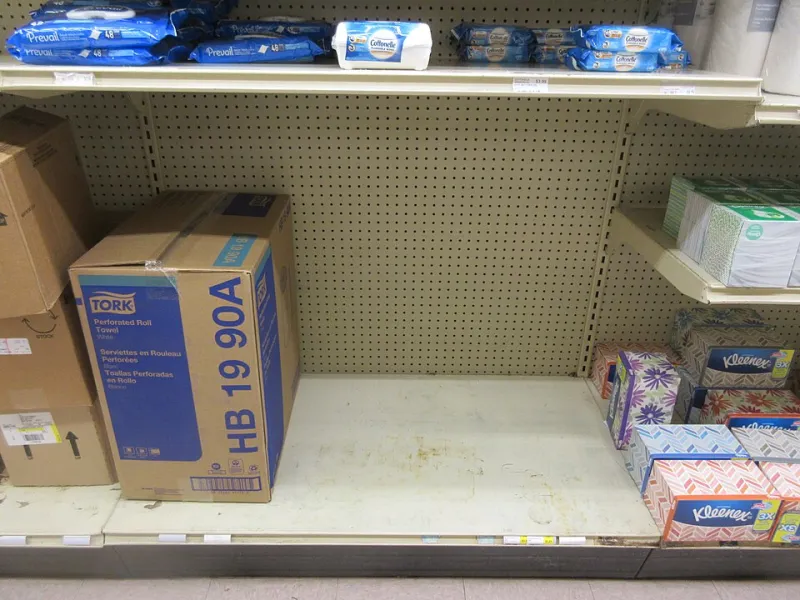
Photo: Infrogmation of New Orleans, CC BY-SA 4.0, via Wikimedia Commons
When a patient hands over a prescription at a retail pharmacy, there is an implicit expectation embedded in that transaction: the medication will be there. It is a reasonable assumption. It is also, with increasing frequency, an incorrect one.
American patients are encountering out-of-stock medications at their local pharmacies at a rate that has grown steadily over the past decade. The causes are structural, the consequences are clinical, and the experience — being told that a medication your doctor prescribed is simply unavailable — is one that more patients are navigating without any clear guidance on what to do next.
The Illusion of the Well-Stocked Shelf
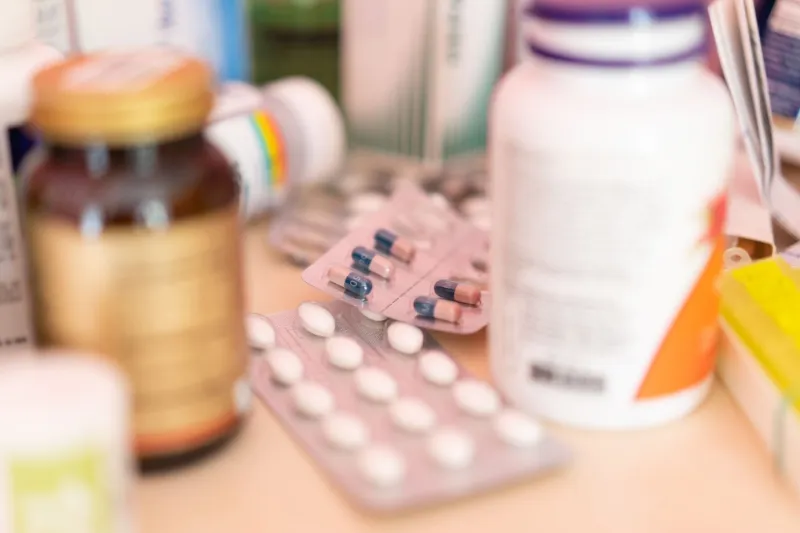
Retail pharmacies present an appearance of abundance. The shelves are organized, the lighting is clinical, and the rows of labeled bottles suggest a depth of inventory that inspires confidence. But the reality behind that counter is considerably more precarious.
Most retail pharmacies operate on a just-in-time inventory model. Rather than maintaining large stockpiles of every medication they dispense, they order in relatively small quantities on a frequent basis, relying on their wholesale distributors to replenish supply quickly. This model reduces storage costs and minimizes the financial exposure of holding slow-moving inventory — but it also means that a disruption anywhere in the supply chain translates almost immediately into a gap on the shelf.
The three major pharmaceutical wholesalers in the United States — McKesson, AmerisourceBergen, and Cardinal Health — collectively distribute the majority of medications dispensed at retail pharmacies. When any of these distributors encounters a supply constraint, the effect ripples downstream to thousands of pharmacies simultaneously, often without warning.
Why Stock Disappears Without Notice
The reasons a specific medication might be unavailable on any given day are numerous and frequently unpredictable. Manufacturing disruptions are among the most common. A single active pharmaceutical ingredient may be produced at only one or two facilities globally. A quality control failure, a regulatory action by the Food and Drug Administration, or a natural disaster affecting a production site can eliminate the supply of a finished medication within weeks.
Generic drug economics add another layer of instability. Because generic manufacturers compete on price, margins are thin. When the profitability of producing a particular generic falls below a viable threshold, manufacturers may reduce production volume or exit the market entirely. The result is a medication that was widely available for years suddenly becoming difficult to find at any price.
Beyond manufacturing, pharmacy-level factors contribute to stock variability in ways patients rarely consider. A local pharmacy's purchasing decisions are influenced by its size, its patient population, its relationship with its primary wholesaler, and its own financial constraints. A small independent pharmacy may simply lack the purchasing volume to guarantee consistent access to high-demand medications. Even large chain pharmacies can find specific products backordered at the distributor level, leaving their individual locations with no recourse.
The Patient Experience of an Empty Shelf
For the patient standing at the counter, the explanation matters far less than the consequence. A prescription cannot be filled. The medication that manages a chronic condition, prevents a relapse, or controls a symptom that significantly affects quality of life is not available today. The pharmacist may suggest calling other locations, or waiting to see if the next shipment resolves the shortage. Neither option addresses the immediate need.
This experience is not rare. A 2022 survey conducted by the American Society of Health-System Pharmacists found that the majority of pharmacies in the United States were managing active drug shortages at any given time. Patients with complex medication regimens — those managing multiple chronic conditions, those on specialty drugs, those taking medications with narrow therapeutic windows — are disproportionately affected.
The downstream effects on health are real. Patients who cannot fill a prescription on schedule are more likely to skip doses, split tablets to extend their supply, or discontinue treatment temporarily. Each of these behaviors introduces clinical risk that their prescribing physician did not intend and may not be aware of.
The Transparency Gap
One of the most frustrating aspects of local pharmacy inventory instability is that patients have almost no visibility into it before it affects them. There is no public-facing system that allows a patient to confirm, before making the trip to the pharmacy, whether their specific medication is currently in stock at their specific location.
Pharmacies are not obligated to proactively notify patients of anticipated shortages. The first indication a patient typically receives that there is a problem is the moment they are told their prescription cannot be filled — often after they have already discontinued an existing supply in anticipation of the refill.
This opacity is not an accident of the system; it is a feature of a retail model that is not fundamentally designed around the patient's informational needs. It is designed around throughput, margin, and the efficient management of a high-volume transaction environment.
How Centralized Distribution Changes the Equation
National home delivery pharmacy services operate from a fundamentally different supply model. Rather than relying on just-in-time replenishment through regional wholesalers, centralized pharmacy operations maintain substantially larger inventory buffers and maintain direct relationships with a broader range of suppliers and manufacturers.
This structural difference translates into meaningful advantages for patients. When a particular manufacturer encounters a production shortfall, a centralized pharmacy with diversified supplier relationships can often source the same medication — or an approved therapeutic equivalent — from an alternate channel before the shortage reaches the patient. The patient's supply is maintained without interruption.
Services like MedDelivered are designed specifically to insulate patients from the volatility that characterizes local retail pharmacy inventory. Refill schedules are tracked proactively. Supply constraints are identified at the distribution level before they become patient-level problems. And when substitutions are necessary, they are coordinated with the prescriber — not left to the patient to navigate alone at a pharmacy counter.
Reliability as a Clinical Requirement
It is worth stating plainly what the evidence implies: for patients managing chronic or serious conditions, medication availability is not a convenience issue. It is a clinical requirement. A supply chain that delivers medications reliably and predictably is not a premium service — it is the baseline standard that patient care demands.
Local pharmacy inventory instability does not reflect a failure of individual pharmacists, who are generally doing their best within a system that was not designed with supply reliability as its primary objective. It reflects a structural mismatch between how retail pharmacy operates and what patients with ongoing medication needs actually require.
For those patients, the question is not whether their pharmacy will have their medication today. It is whether their delivery model is designed to ensure that the answer is always yes.