Billions Flushed Away: The Quiet Crisis of Unused Prescriptions Filling American Medicine Cabinets
The Scale of a Problem Hidden Behind Closed Cabinet Doors
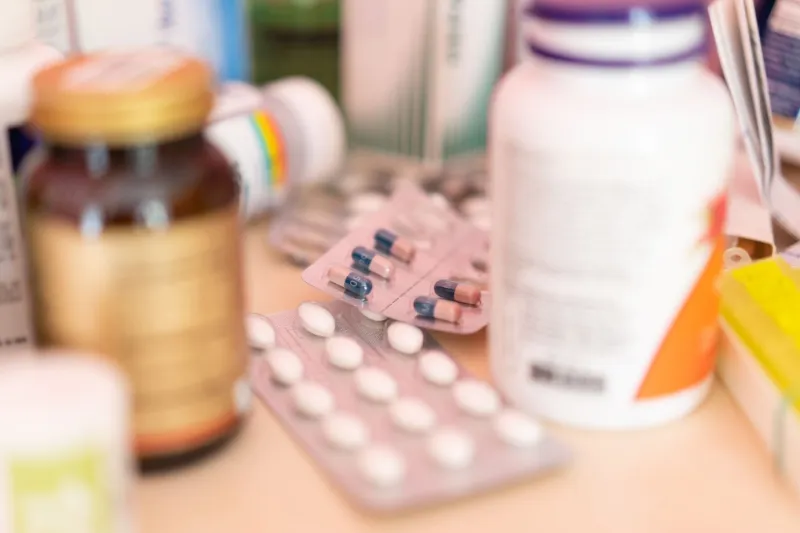
Open the medicine cabinet in the average American home and you are likely to find something more revealing than a toothbrush: half-empty blister packs, amber bottles with outdated labels, and prescriptions that were filled months ago and never completed. This is not a minor inconvenience — it is a systemic failure with consequences that ripple across household budgets, public health infrastructure, and the environment.
Research published across pharmacy and health economics journals consistently places the annual cost of unused, wasted, or abandoned prescription medications in the United States at hundreds of billions of dollars. Some estimates approach $500 billion when accounting for drugs dispensed through insurance plans, Medicare and Medicaid programs, and out-of-pocket purchases that patients ultimately discard. These are not medications that expired in a warehouse or were lost in transit. They were prescribed, dispensed, paid for — and then forgotten.
The problem is structural. And for many patients, it begins the moment a prescription is filled.
Why Patients Stop Taking Medications They Still Need
The reasons patients accumulate unused prescriptions are numerous and often overlapping. Side effects prompt an abrupt stop. A physician adjusts a dosage or switches a patient to a different drug entirely, rendering the remaining supply obsolete. A patient recovers — or believes they have recovered — before the prescribed course concludes. In other cases, the original condition resolves, but the refill was already processed and delivered before anyone had the chance to cancel it.
For patients managing chronic conditions, the dynamics are different but equally wasteful. A change in insurance formulary might shift a patient from one brand to a generic equivalent, leaving the previous supply untouched. A hospitalization can disrupt a medication routine so thoroughly that the patient returns home to find stockpiles of drugs they are no longer taking on the same schedule.
Then there is the behavioral dimension. Many patients, particularly those who have experienced prior shortages or access difficulties, intentionally over-request refills as a hedge against future disruption. The logic is understandable — but the result is accumulation that far outpaces actual consumption.
The Financial Burden Falls on Patients First
For the individual patient, the economics of medication waste are straightforward and painful. Every unused pill represents a portion of a copayment, a deductible expense, or a full out-of-pocket cost that will never be recovered. Insurance plans do not issue refunds for dispensed medications that go unused. Pharmacies are not permitted to restock returned prescription drugs under federal law. Once a medication leaves the dispensing counter, its financial value to the patient is fixed — regardless of how many doses are ultimately taken.
Consider a patient managing Type 2 diabetes who is transitioned to a newer medication class mid-month. The previous prescription, dispensed in a standard 90-day supply, sits untouched. At even a modest copayment of $45 per fill, that represents a direct loss. Multiply that pattern across a household managing multiple conditions — which describes the majority of Americans over the age of 50 — and the cumulative waste becomes significant over the course of a year.
High-cost specialty medications amplify the problem considerably. A biologic prescription carrying a monthly cost of several thousand dollars, discontinued after two fills due to intolerance, represents a loss that no household budget absorbs easily.
The Environmental Dimension Patients Often Overlook
Beyond personal finances, unused medications create a disposal challenge that communities across the country are still working to address adequately. For decades, the default advice was to flush unwanted medications — guidance that has since been substantially revised as research documented the presence of pharmaceutical compounds in municipal water supplies and aquatic ecosystems.
The FDA and the DEA now maintain more nuanced disposal guidance, recommending drug take-back programs as the preferred option and providing specific instructions for medications that may be flushed only in the absence of a take-back alternative. The DEA's National Prescription Drug Take Back Day events, held twice annually, collect millions of pounds of unused medications from communities nationwide — a figure that underscores just how much accumulates in American homes between collection opportunities.
For patients without convenient access to a take-back location, disposal remains a practical challenge. Medications mixed with coffee grounds or cat litter and placed in household trash — a method sometimes recommended to deter accidental ingestion — still enter the waste stream in ways that carry environmental risk.
Less waste generated at the source means less waste requiring disposal downstream.
How Delivery Scheduling Can Prevent Waste Before It Begins
The most effective intervention in the unused medication cycle is not a better disposal program — it is a smarter dispensing model. When prescriptions are filled in large quantities on a fixed schedule regardless of a patient's actual consumption rate or clinical status, waste is nearly inevitable. The traditional pharmacy model, optimized for throughput rather than individual patient circumstances, is poorly suited to preventing it.
Home delivery services structured around flexible, patient-responsive scheduling offer a meaningful alternative. Rather than auto-dispensing a 90-day supply at calendar intervals, a coordinated delivery model can align refill timing with verified consumption patterns, physician-confirmed treatment continuity, and patient-reported status. If a medication is adjusted, paused, or discontinued, a responsive delivery service can halt a scheduled shipment before it processes — eliminating the waste before it occurs rather than managing it afterward.
At MedDelivered, this kind of coordinated approach is central to how we think about prescription fulfillment. Our delivery scheduling is designed to be responsive to changes in a patient's treatment plan, not simply to replicate the fixed-interval dispensing that has historically driven accumulation. Patients can communicate changes, pause upcoming deliveries, and work with our pharmacy team to right-size their supply — reducing the likelihood that medications will arrive at a home where they are no longer needed or appropriate.
Practical Steps Patients Can Take Now
While structural changes in how prescriptions are dispensed represent the most durable solution, patients can take immediate steps to reduce their own contribution to medication waste.
First, conduct a thorough inventory of current medications before requesting any refill. Many patients discover they have adequate supply already on hand when they take the time to look. Second, communicate any changes in treatment — new prescriptions, discontinued drugs, dosage adjustments — to every pharmacy involved in your care. Fragmented prescription management is a significant driver of unintentional over-dispensing. Third, locate the nearest DEA-authorized take-back location or collection kiosk for any medications you have confirmed you will not use. The DEA's online locator tool makes this straightforward in most metropolitan areas.
For patients using a home delivery service, the most important step is to keep your pharmacy informed. A delivery service can only adapt to your circumstances if it has accurate, current information about your treatment plan.
The Waste Cycle Is Not Inevitable
The billions of dollars in medications discarded by American households each year are not simply the cost of doing business in a complex healthcare system. They represent a failure of coordination — between prescribers and dispensers, between patients and their pharmacies, between the timing of supply and the reality of demand.
Smart delivery is not a complete solution to every dimension of this problem. But it is a meaningful one. When the logistics of prescription fulfillment are designed around the actual patient rather than around operational convenience, the conditions that produce waste begin to change. Medications arrive when they are needed, in quantities that reflect real consumption, with the flexibility to adapt when treatment changes.
That is a pharmacy model worth building — and one that begins with how and when your next prescription is delivered.