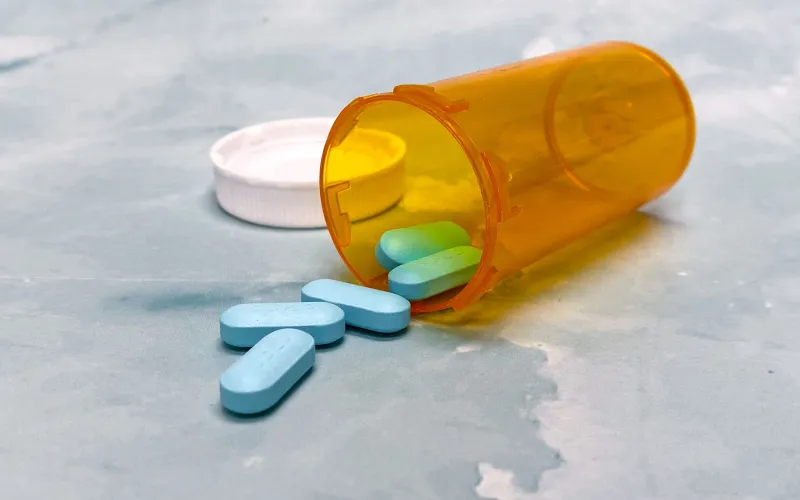
When Your Prescription Vanishes From Every Shelf: How Drug Shortages Leave Patients Behind — and Why Home Delivery Networks Are Filling the Gap
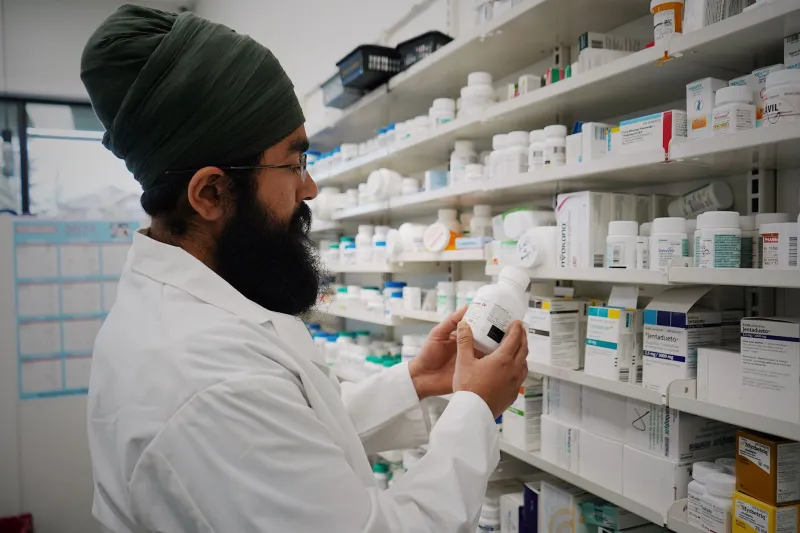
For most Americans, the assumption is simple: a doctor writes a prescription, a pharmacy fills it, and the medication arrives in hand within minutes. That assumption holds — until it does not. For a growing number of patients across the United States, the experience is something far more disorienting: a prescription written, a pharmacy visited, and a shelf that is simply empty.
Drug shortages in the United States are not a new phenomenon, but their frequency, duration, and reach have expanded in ways that are only beginning to register with the broader public. According to data from the American Society of Health-System Pharmacists (ASHP), the number of active drug shortages in the US has remained persistently elevated for over a decade, with hundreds of medications in shortage at any given moment. The drugs involved range from injectable chemotherapy agents to common oral antibiotics — medications that patients depend on not as a matter of preference, but of survival.
The Anatomy of a Shortage
Understanding why shortages occur requires a look at the pharmaceutical supply chain, which is considerably more fragile than most patients realize. A significant proportion of the active pharmaceutical ingredients used in US medications are manufactured overseas, particularly in India and China. When a single manufacturing facility encounters a quality control problem, a regulatory shutdown, or a raw material disruption, the downstream effects can ripple across the entire domestic supply within weeks.
Generic medications are especially vulnerable. Because profit margins on generic drugs are thin, many active ingredients are produced by only one or two global manufacturers. There is little redundancy built into the system. When one node fails, there is no backup.
The consequences are not abstract. In recent years, shortages have affected amoxicillin — one of the most prescribed antibiotics in the country — leaving parents of sick children calling pharmacy after pharmacy. Shortages of ADHD medications such as Adderall created months-long disruptions for patients who depend on them for daily functioning. Cancer patients have faced shortages of cisplatin and carboplatin, two foundational chemotherapy drugs, forcing oncologists into difficult decisions about treatment substitutions with potentially different efficacy profiles.
How Brick-and-Mortar Pharmacies Struggle to Respond
For a neighborhood pharmacy, a drug shortage presents a logistical problem with few good solutions. Most retail pharmacies source their inventory through a primary wholesale distributor. When that distributor's allocation runs out, the pharmacist's options are limited: they can wait for the next shipment, contact secondary distributors — often at higher cost — or simply turn the patient away.
The burden then falls on the patient. Stories of patients calling a dozen pharmacies in a single afternoon, driving across county lines, or going without a critical medication for days are not edge cases. They are a documented feature of the shortage experience. For elderly patients, those without transportation, or individuals managing serious chronic conditions, that burden can translate directly into medical harm.
There is also an information asymmetry problem. Retail pharmacy staff are rarely in a position to proactively alert patients to emerging shortages before they arrive at the counter. The patient learns about the problem at the worst possible moment — when they are already out of medication and in need.
How Centralized Delivery Services Navigate the Same Crisis Differently
Home delivery pharmacy services operate with a structurally different relationship to the supply chain. Because they fulfill prescriptions at scale from centralized dispensing facilities, they typically maintain relationships with multiple wholesale distributors simultaneously. When one supplier's allocation is exhausted, a delivery-based pharmacy can query alternative sources in real time — a capability that most neighborhood pharmacies simply do not have.
This broader network access does not guarantee that a shortage can always be resolved, but it does significantly improve the odds of locating available stock faster. In practical terms, a patient using a home delivery service may find that their prescription is sourced, filled, and shipped within days of a shortage event, while patients relying on local retail pharmacies are still making phone calls.
Beyond supply access, delivery services offer a proactive communication advantage. Because patient prescriptions are managed within a centralized system, pharmacists can identify an impending shortage — based on inventory signals and distributor alerts — before a patient's next refill is due. That advance notice creates a window to explore alternatives, contact prescribers about therapeutic substitutions, or locate available inventory before the patient is left without medication.
The Patient Experience of a Shortage
Consider the experience of a patient managing a serious bacterial infection who is prescribed a specific antibiotic only to be told at the pharmacy counter that it is unavailable. The prescriber must now be contacted, an alternative antibiotic evaluated for appropriateness, a new prescription issued, and the new medication located and dispensed — all while the patient's condition potentially worsens. Each step in that chain represents a delay, and each delay carries clinical risk.
Or consider a cancer patient whose chemotherapy regimen depends on a drug currently in national shortage. Their oncologist may be forced to modify the treatment protocol, substituting a second-line agent that may not carry the same evidence base for their specific cancer type. The emotional and clinical weight of that substitution is significant — and it is a weight that falls entirely on the patient and their care team.
For patients in rural areas or pharmacy deserts, the shortage problem is compounded by geography. Calling multiple pharmacies is not a minor inconvenience when those pharmacies are forty miles apart.
What Patients Can Do Right Now
Navigating a drug shortage as an individual patient requires both information and advocacy. Several practical steps can reduce vulnerability:
Enroll in a home delivery pharmacy service. The supply network advantages described above are most accessible to patients who use a centralized delivery service as their primary pharmacy. Consolidating prescriptions in one place also makes proactive shortage monitoring easier.
Ask your prescriber about therapeutic alternatives in advance. For medications known to experience periodic shortages — certain antibiotics, stimulants, injectable medications — it is worth a conversation with your doctor about what alternatives might be clinically appropriate if your primary medication becomes unavailable.
Monitor shortage databases. The FDA maintains a public drug shortage database at fda.gov that is updated regularly. The ASHP also publishes shortage information. Patients managing complex medication regimens can use these resources to stay ahead of emerging disruptions.
Refill before you run out. This advice applies broadly, but it is especially important in a shortage environment. A patient who requests a refill with ten days of supply remaining has far more options than one who calls on the day their last dose is taken.
A Structural Problem That Demands a Structural Response
Drug shortages are ultimately a systemic failure — the product of a pharmaceutical supply chain optimized for cost efficiency at the expense of resilience. Meaningful long-term solutions will require policy action: incentives for domestic manufacturing, requirements for supply chain transparency, and regulatory frameworks that reduce the concentration risk inherent in single-source generic production.
But while those solutions are debated and slowly implemented, patients need options today. The shift toward centralized, delivery-based pharmacy models is not merely a convenience story — it is, for patients caught in a shortage, a meaningful clinical lifeline. Access to broader supply networks, proactive communication, and the logistical capacity to source medications across multiple channels can be the difference between a disruption and a crisis.
For the patients who have spent an afternoon on the phone, driven across town to an empty shelf, or gone without a critical medication for days, that difference is not a small one.