Stopping Short: The Hidden Forces That Pull Patients Away From Their Prescriptions — and How Doorstep Delivery Brings Them Back
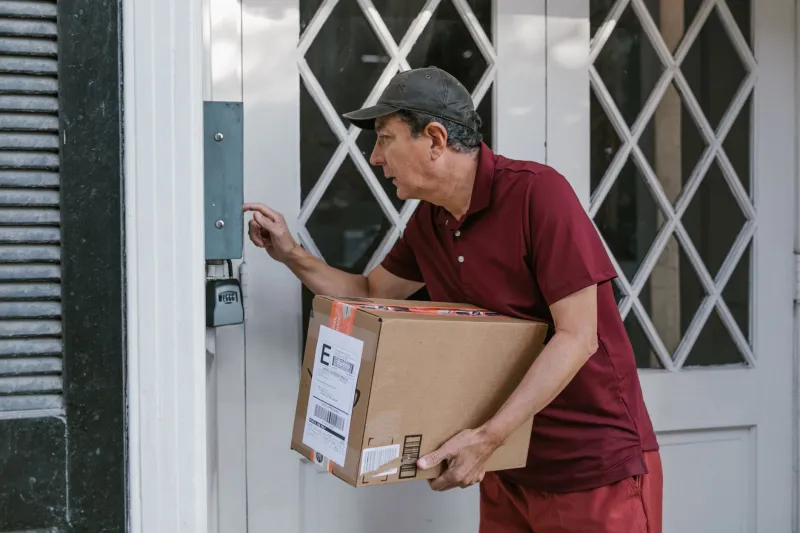
There is a quiet epidemic unfolding not in hospital wards or emergency rooms, but in the everyday decisions patients make about whether to pick up their next refill. Researchers call it medication non-persistence — the tendency for patients to discontinue a prescribed treatment before it has done its job. In practical terms, it means tens of millions of Americans are walking away from medications their physicians prescribed for good reason, often before those medications have had a meaningful chance to work.
The consequences are not abstract. Incomplete antibiotic courses contribute to the development of resistant bacterial strains. Patients who stop antidepressants prematurely are at elevated risk of relapse. Those who abandon antihypertensive therapy face measurably higher rates of stroke and cardiac events. The clinical literature is consistent on this point: stopping short is rarely without cost.
Understanding why patients abandon treatment — and what can realistically be done about it — is one of the more important conversations in contemporary American healthcare.
The Numbers Behind the Abandonment Problem
The scale of medication abandonment in the United States is striking. Studies published in peer-reviewed journals have found that roughly one in four new prescriptions is never filled at all. Among those that are filled, a significant proportion are not refilled when the time comes. Across chronic conditions — hypertension, diabetes, depression, high cholesterol — adherence rates at the twelve-month mark frequently fall below fifty percent.
The pharmaceutical industry refers to prescriptions that are written but never dispensed as "abandoned" prescriptions. But the abandonment problem extends well beyond that first fill. Patients who start a medication and then quietly stop taking it represent an even larger and less visible population. They are not counted in prescription data because they were, at one point, compliant. The drift away from treatment is gradual, and it rarely announces itself.
Why Patients Stop: A Layered Problem
Researchers have identified several distinct categories of reasons patients discontinue medications, and it is important to recognize that these factors rarely operate in isolation.
Logistical friction is among the most underappreciated drivers of abandonment. Getting a prescription filled requires time — time to travel to a pharmacy, time to wait, time to coordinate a pickup schedule with work and family obligations. For patients managing multiple medications on different refill cycles, the logistical burden compounds quickly. Each pharmacy trip is a small obstacle, but small obstacles, repeated often enough, erode commitment.
Cost anxiety plays a significant role as well. Even insured patients sometimes arrive at the pharmacy counter to find a copay higher than anticipated. Research has shown that unexpected out-of-pocket costs at the point of dispensing are a strong predictor of prescription abandonment. When a patient cannot immediately reconcile a medication's price with their budget, the path of least resistance is to leave without it.
Side effect concerns and perceived necessity are psychological factors that shape adherence in ways that are harder to observe. A patient who begins a statin and experiences mild muscle discomfort may quietly conclude that the medication is doing more harm than good — particularly if they feel otherwise healthy and cannot perceive the silent risk the statin is meant to address. Without regular reinforcement of the treatment's purpose, the perceived cost of taking the medication can begin to outweigh the perceived benefit.
Forgetfulness, while seemingly mundane, is a legitimate clinical concern. Patients with complex regimens, older adults managing multiple conditions, and individuals dealing with cognitive load from illness or caregiving responsibilities are all vulnerable to the simple problem of losing track of when and whether they took their medication.
The Structural Gap Between Prescription and Adherence
What connects these varied causes is a common structural reality: the traditional pharmacy model places most of the logistical burden squarely on the patient. The physician prescribes. The insurer approves. The pharmacy fills. But the patient is left to manage every step that follows — the pickup, the refill timing, the storage, the daily routine of actually taking the medication.
This model works reasonably well for patients with stable schedules, reliable transportation, and uncomplicated medication regimens. For a large portion of the American population, however, those conditions do not reliably hold. Shift workers, caregivers, patients in rural or underserved urban areas, individuals managing multiple chronic conditions — all of them face a system that demands significant personal effort to navigate successfully.
The gap between a prescription being written and a patient actually completing their course of treatment is wide, and it is not primarily a gap in patient motivation. It is a gap in structural support.
How Home Delivery Closes the Loop
Pharmaceutical home delivery addresses the adherence problem by fundamentally reorganizing where the logistical burden falls. Rather than requiring patients to manage their own refill schedules, coordinate pharmacy visits, and remember to pick up medications before they run out, a well-designed home delivery service takes those responsibilities out of the patient's hands.
The practical implications are significant. When medications arrive at a patient's door on a predictable schedule, the opportunity to drift away from treatment is reduced. There is no pharmacy trip to skip on a busy day. There is no moment at the counter where an unexpected cost prompts a patient to reconsider. The medication simply arrives, as expected, ready to be taken.
Proactive refill management is another meaningful feature of home delivery services. Rather than placing the burden of remembering on the patient, the system itself tracks when a refill is due and initiates the process accordingly. For patients on long-term maintenance medications — the very patients most at risk of gradual non-persistence — this kind of systematic follow-through can make a substantial difference.
Research supports this framing. Studies comparing mail-order pharmacy utilization to retail pharmacy use have consistently found higher adherence rates among patients using home delivery, particularly for chronic condition medications. The effect is not attributable to patient selection alone; the structural convenience of home delivery appears to independently improve the likelihood that patients remain on their prescribed regimens.
Adherence as a Health Outcome, Not a Personal Virtue
It is worth being direct about something that often gets lost in discussions of medication adherence: non-adherence is not primarily a moral failing. Framing patients who stop taking their medications as irresponsible or indifferent misses the point and obscures the real solution.
Adherence is a health outcome shaped by the systems and structures patients navigate. When those systems reduce friction, provide timely reminders, and deliver medications reliably, adherence improves — not because patients suddenly become more disciplined, but because the environment supports the behavior the treatment requires.
Home delivery of prescription medications is, at its core, a structural intervention. It does not change the medication. It does not change the patient's underlying motivation. What it changes is the environment in which patients are expected to maintain their treatment — and that change, for many people, is precisely what makes the difference between completing a course of therapy and stopping short.
For the millions of Americans who are currently falling off their prescribed regimens not out of indifference but out of exhaustion, inconvenience, or simple logistical overload, a more supportive delivery model may be the most practical health intervention available.