Expiration Dates, Explained: What the Science Actually Says and How Timed Home Delivery Keeps Your Medications at Their Best
The Number on the Label Is Not What You Think
Every prescription bottle and over-the-counter package in the United States carries an expiration date. For most patients, that date functions as a hard boundary — a deadline after which the medication is assumed to be either useless or unsafe. The reality, according to decades of pharmaceutical research, is considerably more complex.
Expiration dates in the U.S. are set by manufacturers in accordance with Food and Drug Administration regulations. They represent the point through which the manufacturer guarantees full potency and stability under specific storage conditions — not the moment the drug chemically transforms into something harmful. In other words, the date is a quality assurance commitment, not a biological cliff edge.
A landmark study conducted by the FDA in partnership with the U.S. military — the Shelf Life Extension Program — tested the stability of over 100 drug products stored under controlled conditions. The results were striking: roughly 90 percent of the medications tested remained fully potent well beyond their labeled expiration dates, in some cases by years. While this program was designed for military stockpile management rather than consumer guidance, it fundamentally reshaped how pharmaceutical scientists think about drug degradation timelines.
How Drugs Actually Degrade — And Why Storage Is Everything
Most medications degrade through predictable chemical processes: oxidation, hydrolysis, photolysis, and thermal decomposition. The rate at which these reactions occur depends almost entirely on environmental conditions — primarily temperature, humidity, and light exposure.
This is where the gap between the laboratory and the American medicine cabinet becomes significant. FDA stability testing is conducted under standardized, controlled conditions. The average household medicine cabinet, by contrast, is frequently located in a bathroom — one of the warmest and most humid rooms in the home. Medications stored in these conditions may degrade faster than the manufacturer's testing would suggest, meaning a drug technically within its expiration window could be less potent than expected simply because of where it has been kept.
Conversely, medications stored correctly — in a cool, dry location away from direct light — often retain their efficacy well past the printed date. The expiration date, in this context, is best understood as a minimum guarantee rather than an absolute endpoint.
There are meaningful exceptions to this general principle. Certain drug classes — including liquid antibiotics, nitroglycerin, insulin, and eye drops — are genuinely sensitive to degradation and should not be used past their labeled dates. Tetracycline antibiotics have historically been cited as a category where degraded compounds can cause harm, though modern formulations have largely addressed this concern. Patients managing these medications should always consult their pharmacist or prescribing physician before making any decisions about use timing.
The Waste Problem No One Talks About
Americans discard an estimated $400 billion worth of prescription drugs annually, according to research published in peer-reviewed health economics literature. A significant portion of that waste stems from medications that expire before they are fully used — a pattern driven in large part by the mismatch between how medications are dispensed and how patients actually consume them.
Sporadic pharmacy visits, irregular refill schedules, and bulk dispensing all contribute to this cycle. A patient who picks up a 90-day supply of a chronic condition medication but travels frequently, skips doses during illness, or simply forgets refills may find themselves holding a partially used bottle approaching its expiration date — and facing a difficult choice between using a product past its guarantee or discarding it and paying for a replacement.
This is a systemic inefficiency, and it has real financial consequences for patients, insurers, and the broader healthcare system alike.
How Coordinated Home Delivery Changes the Equation
Pharmaceutical home delivery services operate on a fundamentally different model than the traditional walk-in pharmacy paradigm. Rather than dispensing medications reactively — filling a prescription when a patient happens to present one — delivery-based services like MedDelivered can coordinate refill schedules with a patient's actual consumption patterns, synchronizing shipments to arrive precisely when needed.
This timing matters more than most patients realize. Medications shipped directly from a licensed dispensing facility to the patient's home typically move through a shorter, more controlled supply chain than those sitting on a retail pharmacy shelf. Reduced transit time and consistent cold-chain or climate-controlled packaging mean that medications arrive closer to their manufacturing date, with more of their guaranteed potency window intact.
When refills are timed accurately — neither too early nor too late — patients are less likely to accumulate surplus medications that approach expiration before they can be used. The result is less waste, fewer replacement purchases, and a more consistent therapeutic experience.
For patients managing chronic conditions that require daily medication — hypertension, diabetes, thyroid disorders, depression — this kind of schedule alignment is not a minor convenience. It is a meaningful clinical and financial advantage.
Practical Steps for Patients
Understanding the science behind expiration dates does not mean patients should make unilateral decisions about using medications past their labeled dates. It does mean that patients are better served by proactive management of their medication supply rather than passive accumulation.
Several practical principles follow from the research:
Store medications correctly. The bedroom nightstand or a kitchen cabinet away from the stove is almost always preferable to the bathroom medicine cabinet. Cool, dry, and dark are the conditions that preserve potency.
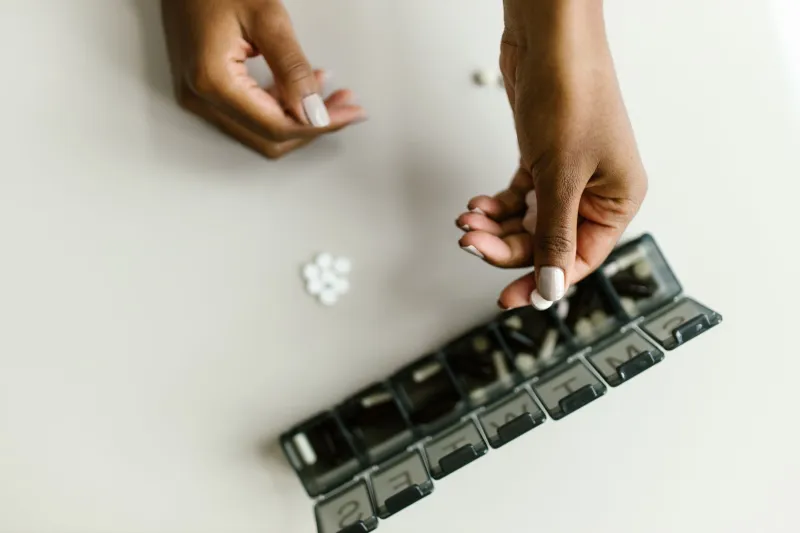
Synchronize your refills. If you are managing multiple prescriptions, ask your home delivery pharmacy to align all refills to a single monthly shipment. This simplifies tracking and reduces the likelihood that any one medication will be forgotten and allowed to expire.
Do not stockpile speculatively. Ordering excessive quantities in anticipation of price increases or supply disruptions often results in waste. A reliable home delivery schedule eliminates the anxiety that drives over-purchasing.
Consult before discarding. If you have medications approaching their expiration date and are uncertain about their continued efficacy, contact your pharmacist before throwing them away. In many cases, a professional assessment will confirm that the medication remains suitable for use — saving you the cost of an unnecessary replacement.
Know which medications require strict adherence to expiration dates. Insulin, biologics, liquid formulations, and certain antibiotic preparations have less margin for error. Your pharmacist can identify which of your prescriptions fall into this category.
A More Informed Relationship With Your Medications
The expiration date printed on your prescription bottle is a useful piece of information, but it is not the complete story of your medication's useful life. It reflects a manufacturer's quality guarantee under specific conditions — a starting point for informed decision-making, not a final verdict.
What does matter, consistently and significantly, is how medications are stored, how they are dispensed, and how well your refill schedule reflects your actual usage. Home delivery services are uniquely positioned to optimize all three of these variables simultaneously — offering patients not just convenience, but a structurally better approach to medication management.
At MedDelivered, our goal is to ensure that the medications you receive are as fresh as possible, arrive when you need them, and are managed in a way that minimizes both waste and out-of-pocket expense. Because the best medication is one that works — and getting there requires more than just picking up a bottle when you happen to remember.